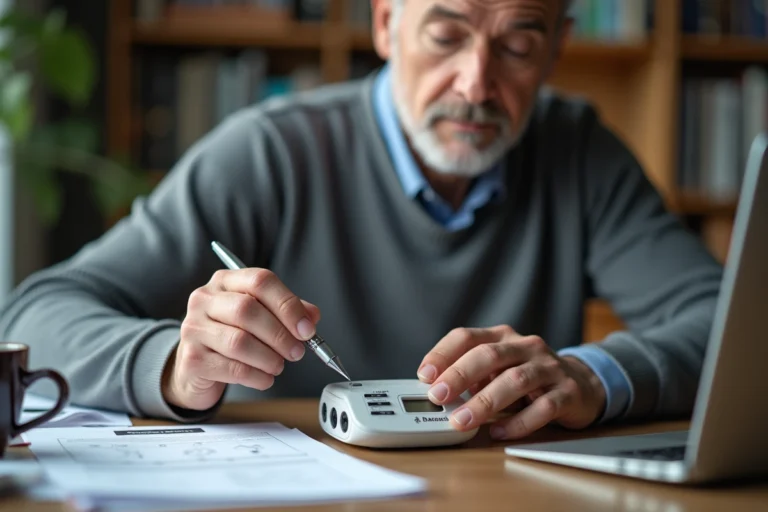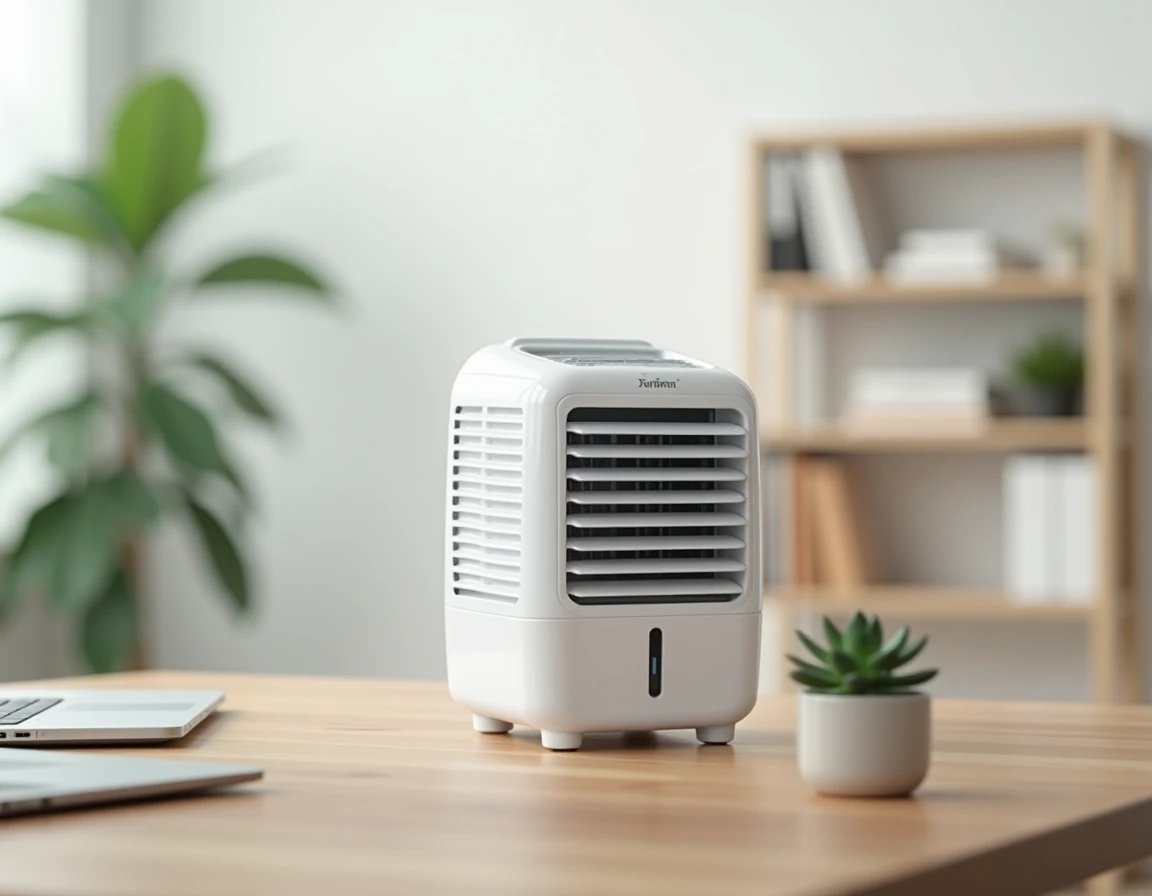
A studio under the rooftops, a south-facing room, a windowless office: it is in these specific configurations that a Silvercrest mini air cooler from Lidl becomes particularly useful. The device operates by evaporation, with a water tank and cold accumulators. It does not replace air conditioning, but on a small surface, the difference in comfort is clearly felt near the airflow.
Where to place the Silvercrest for effective cooling
It is often thought that simply plugging the device in anywhere in the room is sufficient. In practice, placement determines the entire experience. The airflow cooled by evaporation loses effectiveness beyond one or two meters. Therefore, it is necessary to direct the airflow directly towards the occupied area: the desk, the bed, the sofa.
Place the cooler on a flat and stable surface, at table height if possible. On the floor, the airflow passes under the useful area. On a shelf that is too high, it blows above head height. A bedside table or a small side table next to the workstation yields the best results.
One point that buying guides often overlook: air circulation in the room changes everything. If the window is closed and the air is saturated with humidity, evaporation slows down and the cooling effect becomes negligible. Better results are obtained by slightly opening a window to refresh the air, especially in small rooms.
For those looking for a detailed guide, the steps to install a Lidl Silvercrest mini air cooler also cover the connection and speed settings.
Electrical connection of the Silvercrest cooler and precautions to take
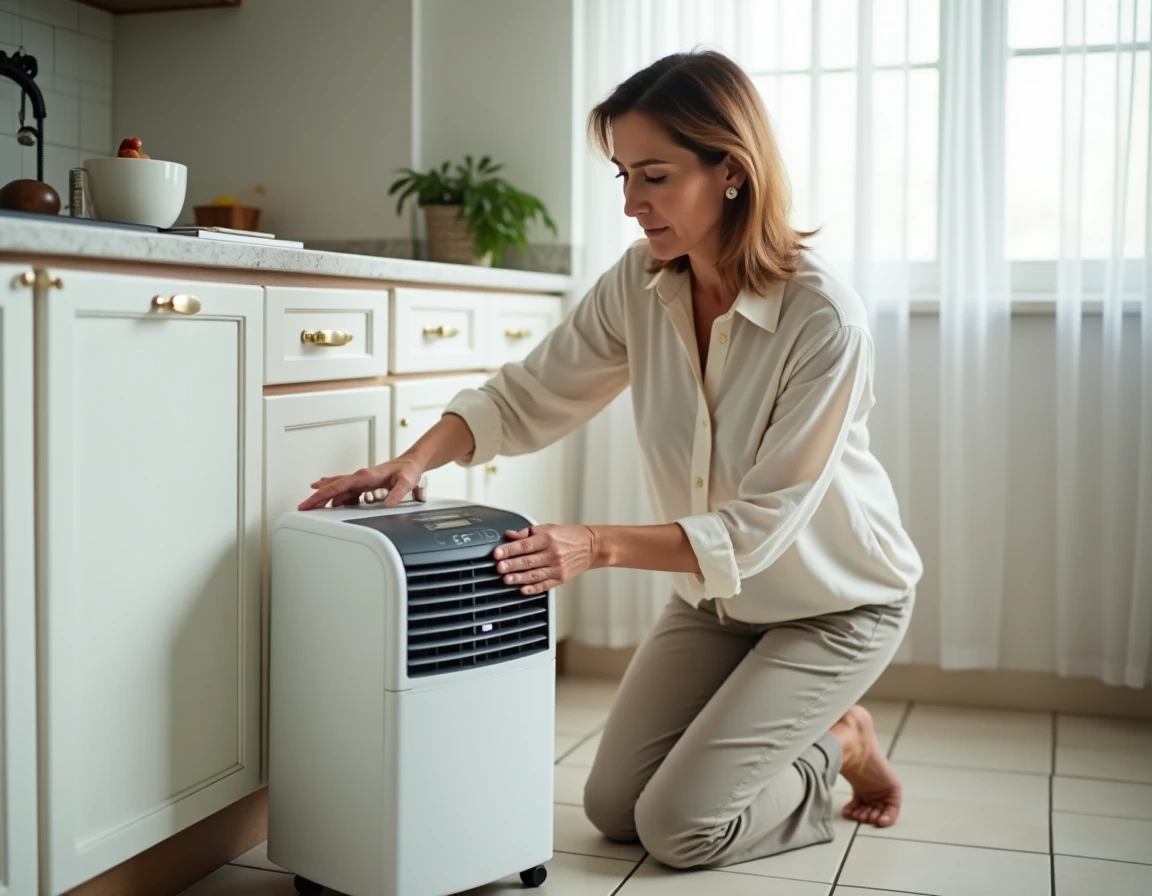
The Silvercrest plugs into a standard outlet or via a USB port depending on the model. The power remains low, but a few common-sense rules apply.
Distance from water sources
Even though the device contains a tank, it should not be plugged in close proximity to a sink, shower, or basin. The NF C 15-100 standard regulates the positioning of outlets in damp rooms, and by extension, that of any electrical device powered in these areas. In practice, avoid the bathroom and maintain a reasonable distance from water sources in the kitchen.
Extension cords and power strips
Plugging the cooler into an overloaded power strip is not recommended. The device’s consumption is modest, but stacking connections on the same circuit increases the risk of overheating, especially in summer when other devices (fans, chargers) are running simultaneously. Prefer a dedicated wall outlet or a power strip with surge protection.
Filling the tank and water maintenance
This is where many users make a mistake. They fill the tank, put in the cold accumulators, and forget about the water for several days. The Ministry of Health reminds us that small water devices (misters, evaporative coolers) require very frequent water renewal and regular complete drying of the tank to limit the risk of bacterial proliferation, including legionella.
In practice, here are the steps to follow:
- Empty and rinse the tank every two days, even if the water seems clean. A slimy film can form quickly, especially in hot weather.
- Completely dry the tank once a week by leaving the device open, without water, for a few hours.
- In areas where the water is very hard, descale the tank and filters more often. Limescale reduces evaporation efficiency and clogs internal components.
- Use cold tap water, not stagnant water or water from a rainwater collector.
Noise of the Silvercrest mini cooler during nighttime use
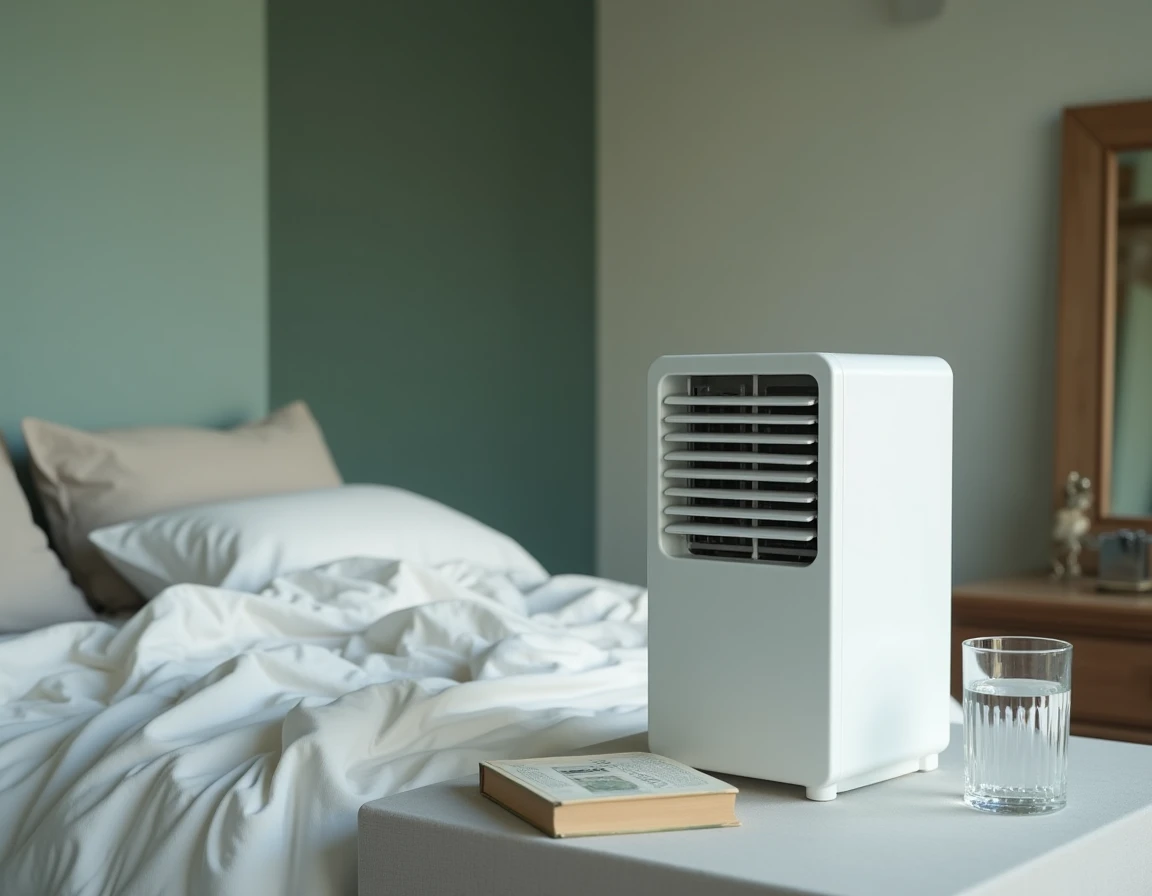
This is the point where feedback varies the most. The noise level of a mini table cooler depends on the chosen ventilation setting. At minimum speed, most users find the noise acceptable for sleeping. At maximum speed, it approaches the level of a standard desk fan, which may disturb noise-sensitive individuals during sleep.
ANSES emphasizes that exposure to nighttime noise, even at moderate levels, can disrupt sleep quality. If you plan to use the Silvercrest at night, it is better to test the lowest setting and position the device at a sufficient distance so that the airflow is perceptible without the motor dominating the sound environment.
A detail often overlooked: the surface on which the device rests can amplify vibrations. A glass table or metal tray transmits more resonance than a wooden piece of furniture or a fabric underlay. Placing a small non-slip rug under the cooler significantly reduces perceived noise.
Real limits of the evaporative cooler
An air cooler is not an air conditioner. It does not extract heat from the room; it lowers the perceived temperature in the airflow through the evaporation of water. The effect is localized and decreases rapidly with distance.
In an already humid environment (stormy day, poorly ventilated room after a shower), evaporation is less effective and the cooling gain becomes very low. The device operates optimally in dry, warm air, with minimal circulation.
For a large room or an entire home, the mini Silvercrest will not be sufficient. It remains suitable for personal and close use: the workstation, the reading corner, the bedside table. Keeping this limit in mind avoids disappointment and allows you to make the most of the device in situations where it truly makes a difference.