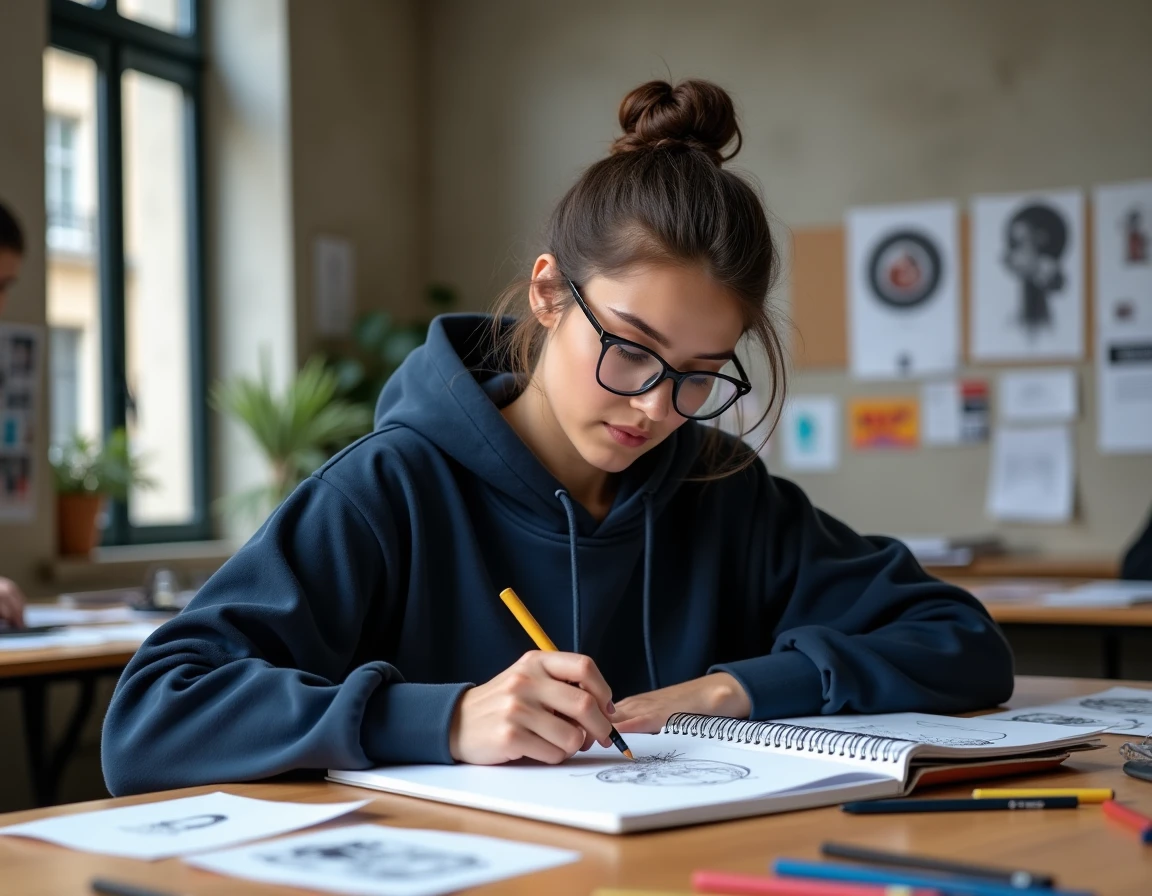
The Gobelins Bachelor in Motion Graphic Design trains profiles capable of creating animations for the web, advertising, or cinema over three years. The program combines two years of full-time courses, followed by a third year in alternating work-study. Accessing this program requires passing through a selection process where the portfolio, visual culture, and narrative ability count as much as academic level.
Ultra-short storytelling: the criterion that distinguishes motion design portfolios
The official pages of the bachelor list skills in graphic design and animation. They do not mention a criterion that weighs heavily during the evaluation of applications: the ability to tell a story in a few seconds.
Professional speakers who have passed through Gobelins or currently teach there explain that the juries value projects that can convey a clear and effective narrative in five to fifteen seconds, in vertical or square formats. This format reflects the reality of the market (advertising, branded content, social media).
Two portfolios may be technically similar. What separates them is narrative readability. A candidate who strings together style exercises without a guiding thread makes less of an impression than another whose each piece tells something, even briefly. To delve deeper into the expectations related to admission to the Gobelins motion design bachelor in 2026, the portfolio remains the area where the difference is made.
In practical terms, including two or three short animations designed for a mobile screen, with a message identifiable from the first second, sends a strong signal to the jury. It is better to have three well-finished pieces of this type than a long reel without narrative intent.
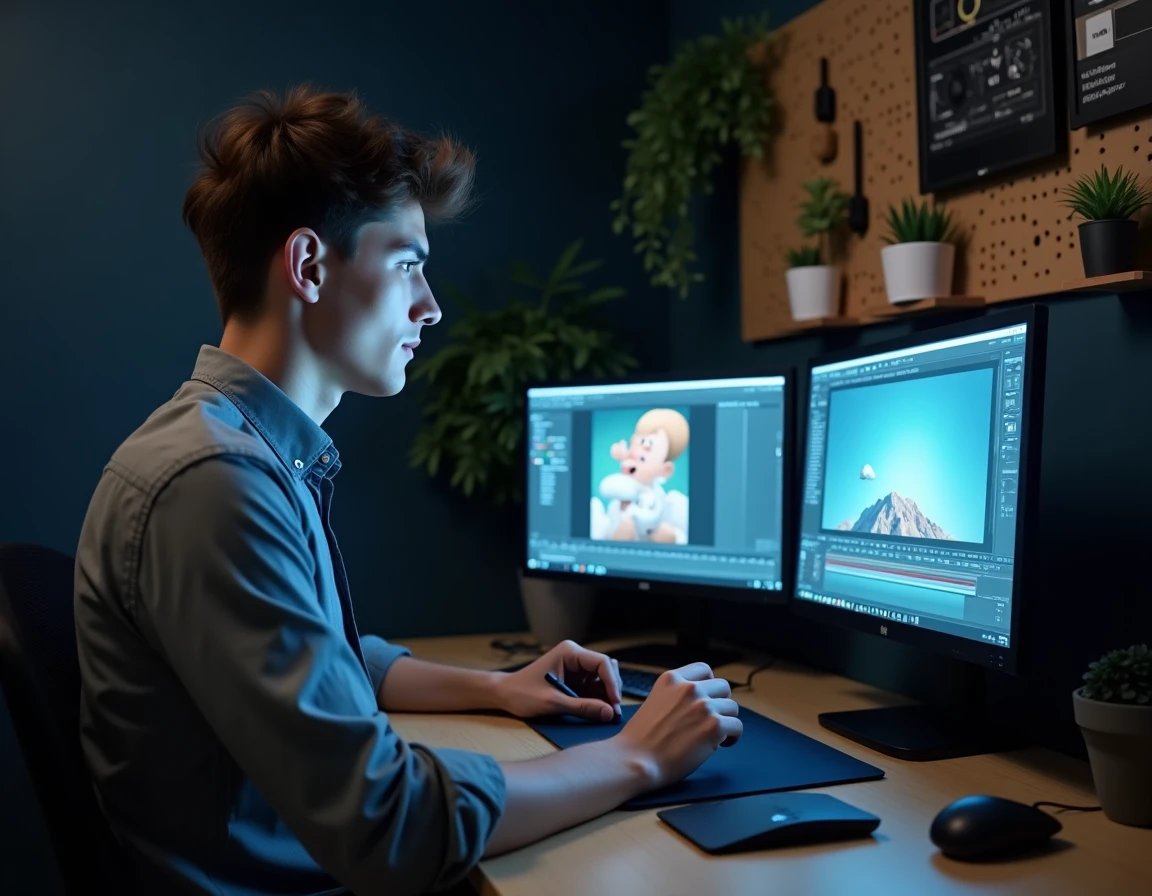
AI tools and motion design: what Gobelins juries observe in applications
Since the 2023-2024 sessions, the role of generative tools (Midjourney, Runway, and equivalents) in creative processes has become an explicit topic during admission interviews. The juries are not looking to know if the candidate uses these tools. They assess the candidate’s ability to critically integrate these resources into creative processes.
Nuance matters. A portfolio where the visuals are clearly generated by AI without personal refinement poses a positioning problem. In contrast, a candidate who shows how they used a generative tool to explore visual avenues before producing their own assets demonstrates an understanding of the creative process.
Ethical questions addressed in interviews
Teachers from Gobelins and competing schools report that discussions about ethical limits and image ownership are starting to be addressed during oral exams. A candidate capable of articulating why they chose not to use AI on a specific piece, or when they deemed it necessary to take control, shows appreciated maturity.
This does not mean that all generative tools should be banned from the portfolio. The expected stance is that of a creative who understands what these technologies produce, their limitations, and who maintains control over the final result.
Building a motion design portfolio for Gobelins: structure and common pitfalls
The portfolio is the central document of the application. Its construction deserves a methodical approach, not an accumulation of works.
- Limit the number of pieces to a maximum of ten, keeping only those that show a clear intention (narrative, artistic direction, technical exploration).
- Include at least two or three short animated projects, designed for contemporary formats (vertical, square), with a clear beginning and end.
- Show the process: preparatory sketches, mood boards, typographic choices. The juries want to see the thought process behind the scenes, not just the final output.
- Avoid purely school projects without context. If a class exercise is included in the portfolio, it must be accompanied by a note explaining the personal intention behind the result.
The pitfall of a purely static portfolio
A candidate for the motion design bachelor who only presents posters and fixed graphic compositions sends a contradictory signal. The jury expects to see movement, even rudimentary. A simple but well-executed animation is worth more than an overloaded After Effects montage whose visual logic remains confusing.

Academic profile and expected background for the Gobelins Paris bachelor
The bachelor is open to holders of a general or vocational baccalaureate. The original field (applied arts, STD2A, general baccalaureate with a specialty in visual arts or digital) is not an elimination criterion, but it conditions the level of familiarity with the fundamentals of graphic design.
A candidate from a non-artistic background will need to compensate with a strong portfolio and demonstrable visual culture. Gobelins evaluates curiosity and the ability to learn, not just technical background at the time of application.
Entry into the first or second year
Admission can take place in the first year after the baccalaureate, or in the second year for candidates already justifying a background in design or applied arts. In both cases, the application file and the portfolio remain the determining pieces. The oral interview then allows the jury to assess the coherence between the candidate’s professional project and the pedagogy of the bachelor.
The third year takes place in alternating work-study, which implies finding a host company. Candidates who demonstrate an understanding of the targeted professions (motion designer, graphic designer, art director) and real production contexts from the interview facilitate the jury’s projection.
The Gobelins bachelor remains a program where the quality of the creative file takes precedence over the traditional academic background. A candidate who prepares their portfolio rigorously, integrates the narrative codes of short formats, and adopts a thoughtful stance towards generative tools places themselves in the best conditions for the 2026 session.