
Voluntary disappearance remains a misunderstood phenomenon. Every year in France, about a thousand people vanish, sometimes voluntarily. Addressing this issue requires distinguishing between psychological triggers, legal consequences, and protective measures for those left behind, without ever providing an operational manual.
1. Understanding the residual digital footprint before any action

The majority of people found after a voluntary disappearance are located through their digital traces. Bank accounts, phone subscriptions, social networks, browsing histories: each interaction generates a usable data point.
Deleting an account does not erase server-side data. The legal obligations for data retention imposed on telecom operators and banks keep this information accessible to investigators for several months, sometimes years.
We observe that popular articles on this topic underestimate the persistence of this data. Resources detailing tips for disappearing without a trace often overlook this technical reality, skewing the perception of the phenomenon.
2. Consequences on civil status and administrative obligations

A voluntary disappearance does not free a person from their legal obligations. Debts, ongoing contracts, child support payments continue to accrue. The tax authorities do not suspend the taxation of an absent taxpayer.
After a certain period, relatives can initiate a presumption of absence procedure with the judicial court. This process, heavy and lengthy, ultimately allows for the management of the disappeared person’s assets. The presumption of absence does not equate to a declaration of death, which keeps the rights holders in a lasting legal gray area.
3. Psychological warning signs in a person considering leaving

The desire to disappear often reflects distress that goes beyond a simple wish for change. Professional break, debt, domestic violence, parental exhaustion: the triggers are multiple and rarely isolated.
Relatives sometimes notice warning signs: giving away personal belongings, paying off debts early, talking about breaking away from daily life. These behaviors deserve clinical attention, not a romantic interpretation.
4. The role of reporting and the search procedure in the interest of families
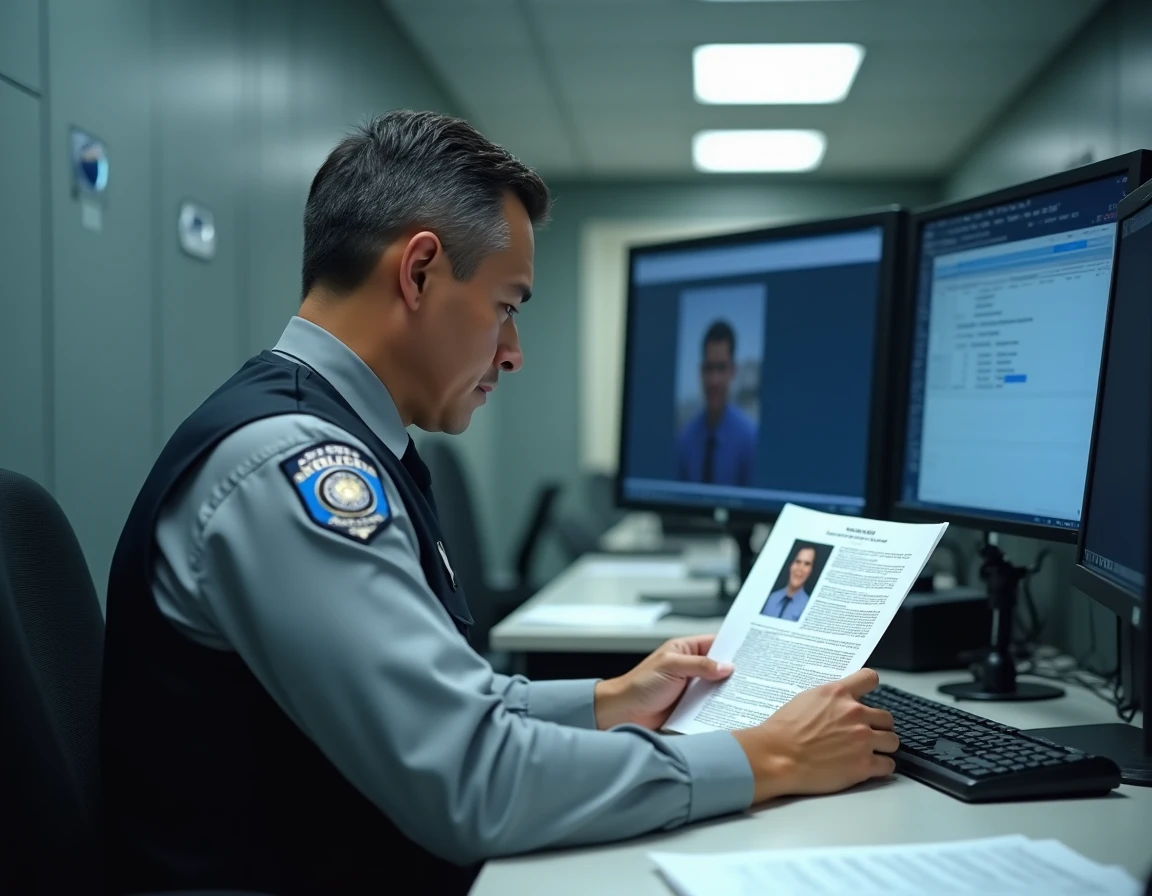
Any report of disappearance triggers an investigation, even for an adult. Contrary to popular belief, there is no mandatory waiting period of 24 or 48 hours before reporting a disappearance in France.
The law enforcement assesses the alarming nature of the situation. If the person is found and is an adult, investigators cannot disclose their location to relatives without their consent. This framework protects the right to privacy of the voluntarily disappeared, while reassuring the family that the person is alive.
5. Police files and interconnection of databases

The wanted persons file (FPR) centralizes reports. Road identity checks, border crossings, hospital consultations can trigger an alert.
The proliferation of interconnected files reduces the maneuvering room for a person trying to remain untraceable. Even professional liars fail due to their own mistakes, not because of the sophistication of the system.
6. The illusion of leaving abroad as a definitive solution

Leaving for abroad remains a common reflex among those considering disappearance. Certain destinations, particularly in South America, attract with a perceived less strict administrative control.
The reality is more nuanced. International police cooperation agreements, border biometrics, and the digitization of civil status records in most countries complicate the maintenance of prolonged anonymity. Without valid documents, access to healthcare, housing, and employment becomes a daily obstacle.
7. Cosmetic surgery and changing appearance: fantasy versus reality

Cosmetic surgery as a tool for disappearance is more a matter of cinema than practice. Procedures require identification documents, medical follow-up, and leave administrative and financial traces themselves.
Facial recognition exploits bony landmarks that surgery does not alter. Changing one’s superficial appearance (hairstyle, weight, clothing style) remains more effective for evading momentary human recognition, but does not withstand a tool-assisted search.
8. Protecting loved ones: existing support systems

The loved ones of a missing person undergo a specific trauma, often compared to an endless mourning. Unlike death, there is no closure ritual, no certainty.
Specialized associations assist families with administrative procedures and psychological support. We recommend that relatives:
- File a report without delay, providing a recent photo and a description of the clothing worn at the last contact
- Contact a lawyer to anticipate the patrimonial consequences (joint accounts, loans, leases)
- Seek psychological support specialized in ambiguous grief, distinct from classic grief
9. The right to disappear: a real but regulated right

Under French law, every adult has the right to sever contact with their loved ones. No law requires one to remain reachable by family or friends. This right has its limits when parental, financial, or contractual obligations are at stake.
A parent who disappears leaving minor children exposes themselves to prosecution for family abandonment. A debtor who orchestrates their insolvency commits an offense. Thus, the right to disappear only covers the personal and relational sphere, not legal obligations.
10. Why this article does not provide a manual

Publishing an operational guide to disappearance poses a direct ethical problem. People seeking to evaporate are often in vulnerable situations: psychological distress, coercion, over-indebtedness. Providing them with techniques would only isolate them further.
The responsible editorial angle distinguishes between analyzing the phenomenon and encouraging action. Competitors addressing this topic oscillate between narrative fascination and practical advice, without ever questioning the real usefulness of this information for their readership.
If you or a loved one are going through a crisis, the national suicide prevention number (3114) and associations helping families of the missing provide concrete resources. Understanding the mechanisms of voluntary disappearance helps to prevent, not to replicate.