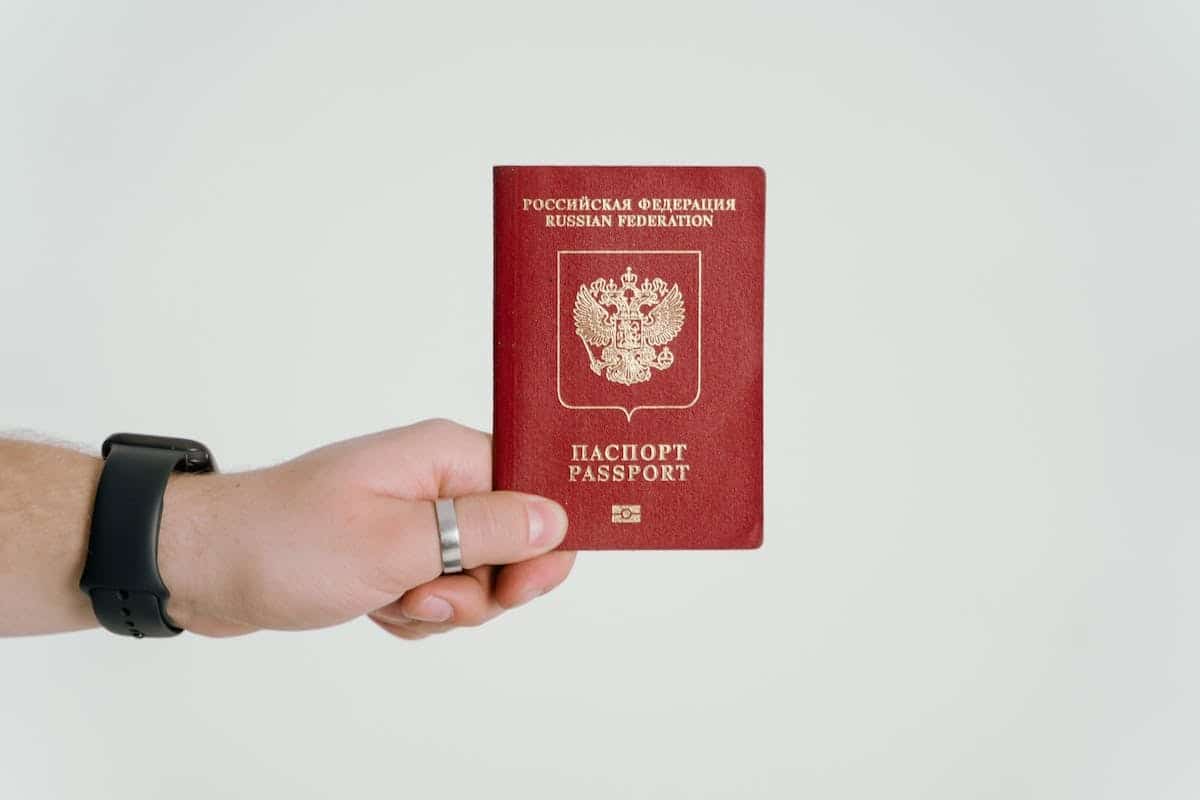
Imagine a situation where you find yourself at the airport, ready to board for a dream destination, but without any identification documents. A nightmarish scenario that might seem to involve an immediate rejection. Yet, is it possible to continue your journey without a passport or ID card? This is an interesting question that deserves exploration. Before you leave, make sure to understand the various protocols and regulations governing international air travel. These rules can vary from country to country and also depend on the airline you are traveling with.
Prepare your documents for flying
When it comes to flying without a passport or ID card, there are a few alternatives to consider. Some countries accept alternative travel documents such as a international driving permit or a student card. It is important to note that these options are not universally accepted and depend on the individual policies of the countries involved.
Another possible alternative is the use of a temporary travel document. This special document can be issued in certain exceptional cases, such as a medical emergency or urgent repatriation. It should be emphasized that obtaining a temporary travel document requires a valid justification and must be requested from the competent authorities.
Some countries also offer the possibility of obtaining a special authorization to travel without official documents. These authorizations may be granted as part of specific programs such as electronic visas or bilateral agreements between countries.
It is important to mention that flying without a passport or ID card carries certain risks and precautions must be taken. Carefully check the requirements of the country you wish to visit to understand if these alternatives are actually admissible.
Also, ensure that you have sufficient information about your personal identity such as a securely stored scanned digital copy, your personal contact details, and a valid medical certificate in case it is needed.
Understand that traveling without official documents can have legal consequences. Airlines may deny boarding if you do not present the required documents, and some countries may treat this situation as a violation of immigration law.
Be sure to contact the relevant authorities and consult a lawyer specializing in international law for precise legal advice in this specific type of situation.

Traveling without a passport or ID card: what alternatives
When considering traveling without a passport or ID card, obtaining a special authorization is often the best solution. Although this may seem complex, it is possible to follow certain steps to facilitate the process.
The first step is to contact the embassy or consulate of the country you wish to visit. These institutions are generally best placed to provide accurate information on the procedures and documents required to obtain a special authorization. They can also guide you to the official forms to fill out.
Once you have contacted the embassy or consulate, you need to gather all the required documents. This may include substantial evidence such as an official invitation letter from a recognized organization in the concerned country, professional documents, or any other element that could support your request.
It should be noted that some countries require a personal interview to assess your situation and motivations. This process allows the competent authorities to ensure that your request is legitimate and not fraudulent.
In parallel, it is recommended to be accompanied by a lawyer specializing in international law during these complex procedures. A legal expert will be able to provide appropriate advice as well as additional assistance throughout the process.
After submitting your request to the competent authorities and providing all the required documents, you will need to be patient. The processing of requests for special authorization can take time due to the complexity and number of requests received.
Once your special authorization is obtained, always keep a physical or digital copy for your future travels. This proof will be required during border checks as well as by airlines before boarding.
Traveling without a passport or ID card certainly requires additional steps to obtain a special authorization. It is crucial to prepare in advance and rigorously follow all procedures to avoid any legal issues or difficulties during your trip. Do not hesitate to consult the official resources provided by the concerned country and seek assistance from an expert if necessary.
Obtain a special authorization to travel: steps to follow
When it comes to traveling without a passport or ID card, you need to take certain precautions to ensure a legal and safe journey. Here are some tips to follow carefully:
Check the country’s requirements: Before even considering this type of travel, make sure you fully understand the laws and regulations of the country you wish to visit. Each destination may have its own rules regarding entry without official documents.
Inform your airline: It is essential to inform the airline you plan to travel with that you do not have the usual documents. Certainly, some carriers may deny boarding if you cannot prove your identity or justify a special authorization.
Prepare alternative identification: Although you do not have your usual papers, it is wise to carry alternative means to prove your identity in case it is needed during travel or at border checks. This could include a certified copy of your ID or authenticated photocopies by a competent authority.
Take out a suitable travel insurance: Standard insurances may exclude situations where non-compliance with administrative formalities leads to legal issues during your stay abroad when documents are missing or fraudulent since they are mandatory. In this case, it is highly recommended to take out specific travel insurance to cover any additional costs or unexpected legal consequences.
Respect local laws: Even if you have obtained a special authorization to travel without official documents, this does not mean you are exempt from complying with the laws in force in the visited country. You must adhere to local rules and regulations, including those related to tourist or business stays.
Keep your information confidential: When providing copies of identification documents during administrative procedures to obtain the special authorization, be sure to protect your sensitive personal data as much as possible to avoid any misuse or fraudulent use.
By following these essential precautions and being well-informed about the legal procedure necessary to travel without a passport or ID card, you can plan your trip with peace of mind while staying within the limits imposed by the law. Always ensure to exercise diligence and caution before undertaking such an atypical journey that may require more preparation than traditional travel.
Precautions to take when traveling without official documents
Traveling without official documents is rare, but some countries accept this practice under certain strictly regulated conditions. Here are some examples of destinations that allow travelers to enter their territory without a passport or ID card:
Equador: This South American country is known for its welcoming policy towards travelers. If you are a citizen of a country that is a member of the Andean Community of Nations (CAN), such as Colombia or Peru, you can enter Ecuador with just your national ID card.
Costa Rica: Located in Central America, Costa Rica offers a similar policy to Ecuador for CAN members. Colombian and Peruvian nationals can therefore visit this beautiful country using only their ID card.
The Cayman Islands: These paradise islands located in the Caribbean have a particular policy regarding traveling without official documents. If you are a British citizen residing in the UK, it is possible to travel to the Cayman Islands with a special permit issued by the local government.
Saint Martin/Sint Maarten: This small Caribbean island is divided between two nations • France and the Netherlands • which gives it an interesting peculiarity for traveling without official papers. If you hold a valid French or Dutch national ID card, you can freely cross the island without needing a passport.
The French overseas territories: French nationals residing in mainland France can travel without a passport to overseas departments and territories such as Guadeloupe, Martinique, Réunion, or Mayotte with their national ID card.
Åland (Ahvenanmaa): This autonomous Finnish region located in the Baltic Sea has adopted a unique policy to encourage tourism. If you are a citizen of the European Union and have a valid identification document issued by your member country, you can visit Åland without needing a passport.
It should be noted that these examples are subject to specific conditions that may vary depending on the nationalities of travelers as well as the political agreements between the different nations involved. It is advisable to check with the consular authorities of the chosen country before planning any travel without official documents.
Although it is rare to be able to travel without a passport or ID card, there are a few destinations that accept this practice under certain strictly regulated conditions. We remind you that it is always preferable to have the necessary official documents to avoid any legal problems or unforeseen issues during travel.
Countries that accept travel without documents: where to go
Although some countries offer the possibility to travel without a passport or ID card, it is important to understand the legal consequences and the risks one exposes oneself to by making this choice.
It should be emphasized that traveling without official documents can be considered an offense in many countries. Local authorities may stop you at the airport or during customs checks and demand proof of identification. Failing to present these documents can lead to serious legal complications such as fines or even arrest.
Some countries require a visa to enter their territory. Even if you manage to board the plane without your passport or ID card, you could be turned away at the border if you do not have the required visa. This could lead to an immediate expulsion back to your country of origin and the confiscation of your personal belongings.
It should be noted that even if some countries accept travelers without official documents under certain specific conditions, this does not necessarily mean they do so in all circumstances. In the event of political or security issues in the host country, these temporary rules may be suspended or modified quickly. Therefore, it is imperative to regularly check information with consular authorities or embassies before any travel without official documents.
Traveling without a passport or ID card can also lead to problems with travel insurance. Most insurance companies require validated official documents to cover medical expenses, flight cancellations, or other unforeseen situations during travel. Without these documents, you risk not benefiting from the protection and reimbursement you are entitled to.
Although a few destinations allow travelers to fly without a passport or ID card under specific conditions, it is essential to understand the legal consequences and the risks involved before embarking on such a journey. It is strongly recommended to always carry the necessary official documents to avoid any legal problems or unforeseen issues on-site. Traveling legally remains the best option to fully and peacefully enjoy your experience abroad.
Traveling without official documents: legal consequences and risks involved
Although traveling without a passport or ID card may seem complicated, there are still some legal alternatives that allow travelers to fly legally.
Some countries have established bilateral or regional agreements that facilitate movement between them. For example, within the European Union, citizens can move freely without needing to present identification during internal border checks. You simply need to carry a valid national ID card to board a flight to another member country.