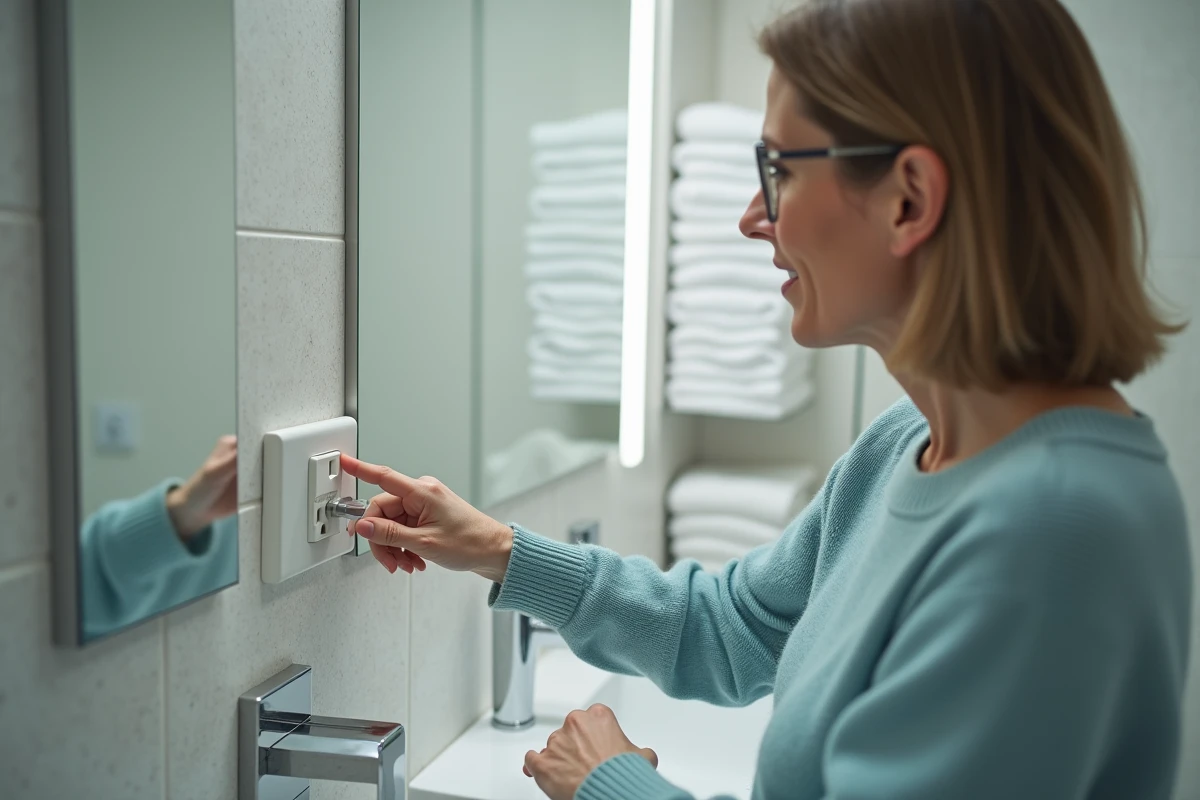
The classic type E or F power outlet remains prohibited within 60 centimeters of the bathtub, regardless of the size of the bathroom. However, since July 1, 2015, the NF C 15-100 standard allows the installation of razor outlets specifically designed for zone 2, under strict protection conditions.
The 2024 version of this regulation adds new requirements regarding circuit safety, the mandatory presence of high-sensitivity differential devices, and the compatibility of equipment with wet areas. These adjustments apply to both new constructions and major renovations.
What the NF C 15-100 standard requires for electrical outlets in bathrooms
The bathroom electrical outlet standard leaves no room for approximation. The space around the bathtub or shower is divided into three precise volumes, numbered from 0 to 2. In volume 0, which corresponds to the inside of the bathtub or shower tray, any conventional electrical installation is strictly prohibited. Next is volume 1, which extends vertically to the showerhead: here, only equipment powered by very low safety voltage (TBTS) is allowed, provided the transformer is placed outside the protected zone. Volume 2, on the other hand, covers a strip of 60 centimeters around water points. Within this perimeter, only devices designed to withstand moisture, with a minimum IPX4 protection rating, are tolerated.
In 2024, the regulation goes further on local equipotential bonding. Every accessible metallic element, including plumbing pipes, radiators, and faucets, must be connected to the ground. This measure aims to limit the risk of electrocution, without exception. Furthermore, a residual differential device (DDR) of 30 mA must now protect all circuits supplying the bathroom, regardless of the layout.
Another point to note: a power outlet must be installed in volume 3, meaning more than 60 centimeters from the bathtub or shower, for every new or renovated bathroom. This regulatory choice is based on a thorough analysis of the risks associated with the coexistence of water and electricity. It mandates the use of suitable, waterproof materials, and uncompromising implementation. These rules apply to both individuals and professionals throughout France.
What changes in 2024: new obligations and differences from the 2015 version
In 2024, the regulation adapts and clarifies the electrical installation standard in bathrooms. While the 2015 version had already established rigorous foundations, the new version starts from scratch: it refines the safety zones, precisely detailing the type of equipment allowed according to the volume, the class, and the necessary protection rating. The division of volumes leaves no room for approximation, with each perimeter imposing its own technical constraints.
One of the major changes: equipotential bonding must now concern every metallic element, without exception. Faucets, pipes, radiators: everything is systematically connected to the ground. This obligation, reinforced by the new regulation, aims to eliminate any risk of electrocution in these environments where water and electricity are in close proximity.
The electrical panel is also strengthened: it must include A-type DDRs for all circuits supplying the bathroom. Where, previously, some uses escaped this constraint, the rule now applies to all. This generalization raises the level of protection for low voltage electrical installations, limiting the consequences of insulation failure or current leakage.
Finally, the standard mandates the installation of at least one outlet, placed outside the risk volumes, even in the smallest washrooms. This new requirement reflects the increasing number of electrical devices in daily life. Implementation must now rely on precise procedures, regular checks, and complete documentation at every stage.

Safety, compliance, and renovation: understanding the steps to follow
Electrical safety cannot be improvised. Intervening on the electrical installation of a bathroom engages the responsibility of the installer, from design to renovation or maintenance. Ensuring grounding and checking equipotential bonding are essential steps, far from mere formalities.
Three axes structure the steps to be followed to ensure compliance and safety:
- The assessment of waterproof equipment suitable for each volume defined by the standard,
- The verification of electrical circuits to ensure they comply with the 2024 regulation,
- The prior declaration to the town hall for any structural modification affecting the building.
The implementation requires a strict separation between the different circuits in the bathroom. It is recommended to choose devices displaying the required protection rating (minimum IPx4 according to the installation volume) and to ensure that each circuit has a differential device (DDR). The slightest error in identifying networks, whether it be the main circuit or communication networks, exposes one to real dangers.
In France, each step must comply with the NF C 15-100 standard. For renovations, a prior declaration is required at the town hall as soon as any modification of the building or electrical networks is considered. The technical documentation, a true thread running through the project, must detail the diagrams, equipment choices, and safety test results. Regular maintenance of installations requires particular attention: check the tightening of connections, clean the equipment, and test the protection systems. Safety, here, is never improvised.
In the bathroom, the standard is not just a text: it is an invisible safeguard that protects every daily action. Between precautions, checks, and new habits, it transforms the water space into a safe area, where electricity is no longer a threat, but a controlled ally.