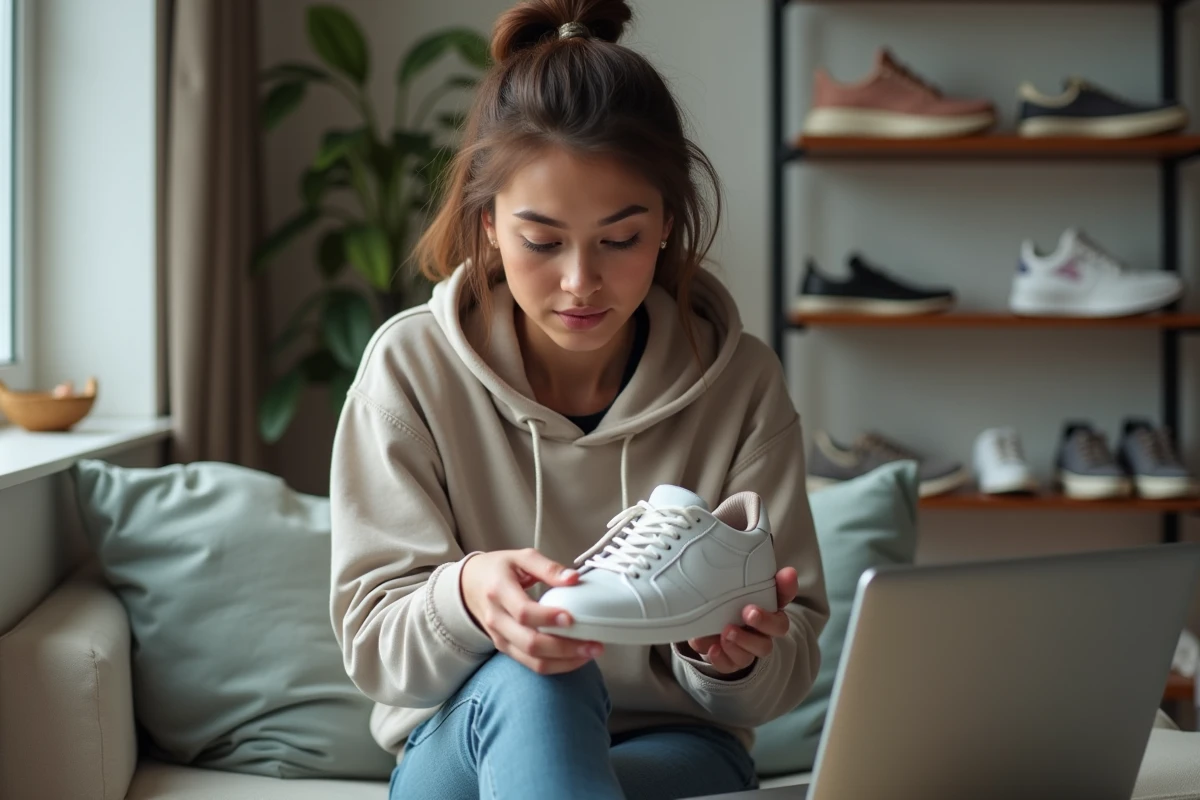
On some retail sites, up to one in five pairs of sneakers show signs of counterfeiting according to recent surveys. The differences between an authentic model and its copy are no longer limited to a poorly sewn label or a dubious box. The increasing sophistication of copies makes their detection much more complex, even for experts. Major brands regularly adapt their marking methods to counter these imitations, but counterfeiters keep pace, quickly integrating each new measure. This balancing act requires heightened vigilance with every online purchase.
Why sneaker counterfeiting is so appealing online
The market for fake sneakers continues to grow. Online resale platforms facilitate the widespread distribution of counterfeit products. In the face of insatiable demand for flagship models like the Yeezy Boost 350, Jordan 4 Retro Black Cat, or Adidas Campus, copies flood the market relentlessly. According to the U.S. Chamber of Commerce, the value of the global counterfeiting market reaches $500 billion annually. France is not spared, with over 20 million items seized in 2023.
Several factors explain this tidal wave: group influence, the temptation of low prices, and the rarity of original models. According to IFOP, 37% of 15-18 year-olds in France have purchased a counterfeit, sometimes without realizing it. Social media and speculation on second-hand platforms normalize the purchase of unofficial sneakers. Many sellers take advantage of the gray area between original and copy, relying on the lack of transparency of certain marketplaces. Young people seeking novelty are subjected to the pressure of effective communication that disturbs their reference points.
Copies are becoming more realistic. Nike, Jordan, or Adidas models are reproduced with care that extends to the smallest details of the packaging. To navigate this, many turn to specialized forums or scour reviews on the Snipes site to try to differentiate between original and imitation. The lack of reliable criteria, combined with the pressure to find a good deal, leaves some buyers helpless, caught off guard by the proliferation of flash sales and the promise of unbeatable prices.
What signs can distinguish an authentic pair from an imitation
To spot a genuine pair, one must observe and compare. Start with the box and packaging: brands pay attention to the quality of the cardboard, the sharpness of the printing, the accuracy of the barcode and serial number, and the alignment of the label. A strange detail, a typo, an unusual color, or a sloppy glue job should raise suspicion.
Next, take the time to examine the materials and stitching. Copies often neglect the consistency of stitches, the quality of the thread, the grain of the leather or mesh. A misaligned logo, a poorly sewn tongue, or an overly hard sole reveal the deception. On new releases like the Nike Dunk Low or Air Jordan, manufacturers add traceability elements: QR codes, holograms, or even discreet electronic chips.
The displayed price also provides a clue. An abnormally low price compared to the market should raise a red flag. It’s also wise to check for the presence and quality of accessories: extra laces, protective paper, authenticity card. To gain clarity, expert communities and collector groups share detailed analyses and publish verification guides.
The behavior of the customer service of the selling site can also be revealing. An available representative, precise answers, and the possibility of returns or verification provide real assurance. Conversely, a vague or absent seller deserves the utmost caution.
Our practical tips to secure your purchases and avoid unpleasant surprises
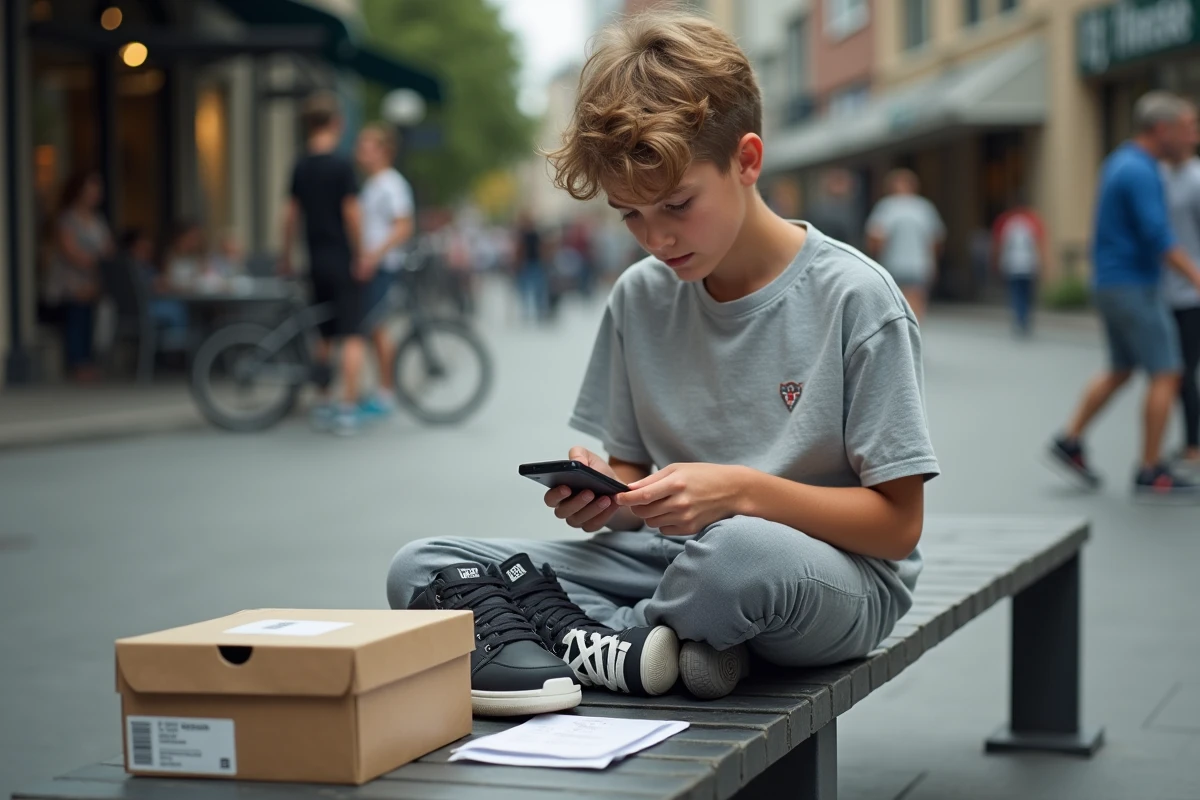
To reduce the risk of encountering fake sneakers, it’s better to turn to official retailers or sites with a well-established reputation. These sellers work directly with brands and commit to the authenticity of the models offered. However, caution should be exercised as soon as one navigates obscure platforms, often responsible for the circulation of counterfeit products online.
Before placing an order, several checks are necessary:
- Ensure the customer service is responsive and the return conditions are clear
- Request precise photos and pay attention to the quality of the seller’s responses
- Take the time to consult specialized forums and enthusiast groups that share their expertise and report imitations
Developing the habit of comparing the displayed price to market prices can also prevent many disappointments. A genuine pair of highly sought-after models like the Jordan 4 Retro Black Cat, Yeezy Boost 350, or Adidas Campus will never be offered at a bargain price, even during promotions. One should also be wary of any inconsistencies in the description: product references, condition of the box, presence of the serial number. In France, presenting a fake pair in an official store can lead to its outright confiscation by the brand. Staying attentive from start to finish of the purchase remains the best guarantee to avoid unpleasant surprises.
In an era where the market evolves faster than safeguards, every buyer finds themselves playing detective. Faced with increasingly perfected copies and sometimes elusive sellers, only vigilance makes the difference. Will the next click be a masterstroke or an unpleasant surprise? It’s up to each individual to decide where to draw the line.