Choosing a wedding dress after 60 means weighing up factors that younger brides may not have to consider: staying comfortable throughout a long ceremony, getting support without a rigid corset, and keeping to a budget—especially when it may be a second marriage. Fabrics, cuts and even return policies vary depending on where you shop. This article compares the options and highlights the differences that can influence your final choice.
Fabrics and cuts for mature brides: a comparison by criteria
Most retailers recommend three main dress styles for brides aged 60 and over. The table below summarises how they compare on the factors that matter when trying on dresses.
| Cut | Bust support | Freedom of movement | Suitable fabrics | Ideal setting |
|---|---|---|---|---|
| Empire (high waist) | Moderate (seam under the bust) | Very good | Chiffon, lightweight crepe | Outdoor ceremony, summer |
| A-line (flared) | Good (light structure) | Good | Mikado, stretch satin | Town hall, traditional reception |
| Sheath / column | High (close-fitting) | Limited (narrow stride) | Heavy crepe, satin | Intimate ceremony, dinner |
The empire cut leaves the stomach and hips unrestricted, which explains its popularity with mature brides. The A-line offers a good balance of structure and ease. A sheath dress is more restrictive and needs a stretch lining to remain comfortable for several hours.
One detail that is rarely mentioned: most brides aged 50 to 60 prefer crepe or stretch satin to tulle or organza. These fabrics are more breathable and accommodate changes in body shape between the fitting and the wedding day.
Lace, sleeves and necklines: details that transform the look after 60
Choosing a wedding dress for a woman over 60 often comes down to deciding how much to cover and how much to reveal. Three-quarter-length lace sleeves strike a balance: they cover the arms without adding bulk to the silhouette.
A boat neckline is another popular option. It visually broadens the shoulders, balances the hips and works well with a short necklace. However, it limits your choice of bra, so check this at your first fitting.
Graphic lace with widely spaced motifs makes the upper body look lighter than dense Chantilly lace. On a crepe base, it creates a matte-and-shine contrast that gives the dress structure without additional embroidery.
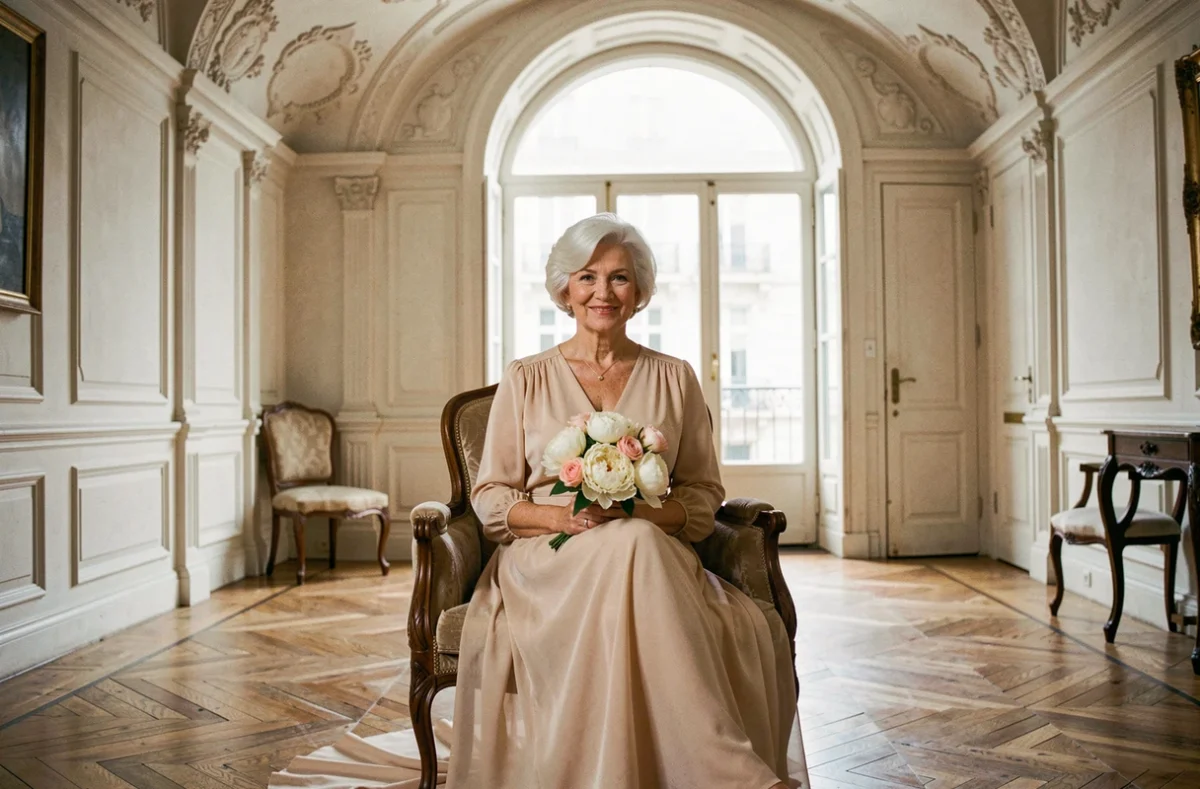
V-necklines remain a reliable choice: they elongate the neck and suit most body shapes. If the V is too low, a piece of illusion tulle sewn inside can easily provide more coverage—a simple alteration most dressmakers can handle.
Made-to-measure or pre-owned wedding dresses: hidden costs to plan for
The price on the label does not reflect the full cost of a wedding dress. The total can increase in three areas that are often underestimated.
- Alterations to a pre-owned dress may include replacing a fastening, specialist cleaning and adjusting the size. Getting an alteration quote before buying makes it easier to compare the total cost with that of a new dress.
- Made-to-measure or customised dresses are excluded from the 14-day right of withdrawal for distance purchases, in accordance with Article L221-28 of the French Consumer Code. This exception applies as soon as the dress is modified to the buyer’s specifications.
- Accessories (a stole, hair jewellery, suitable shoes) can quickly add to the total. Including them in your initial budget helps avoid last-minute compromises.
When shopping online, the garment’s condition and the seller’s terms matter just as much as your statutory rights. Reading the terms of sale before placing an order is the best way to protect yourself, especially on pre-owned platforms.
Colour and accessories: move beyond white without losing elegance
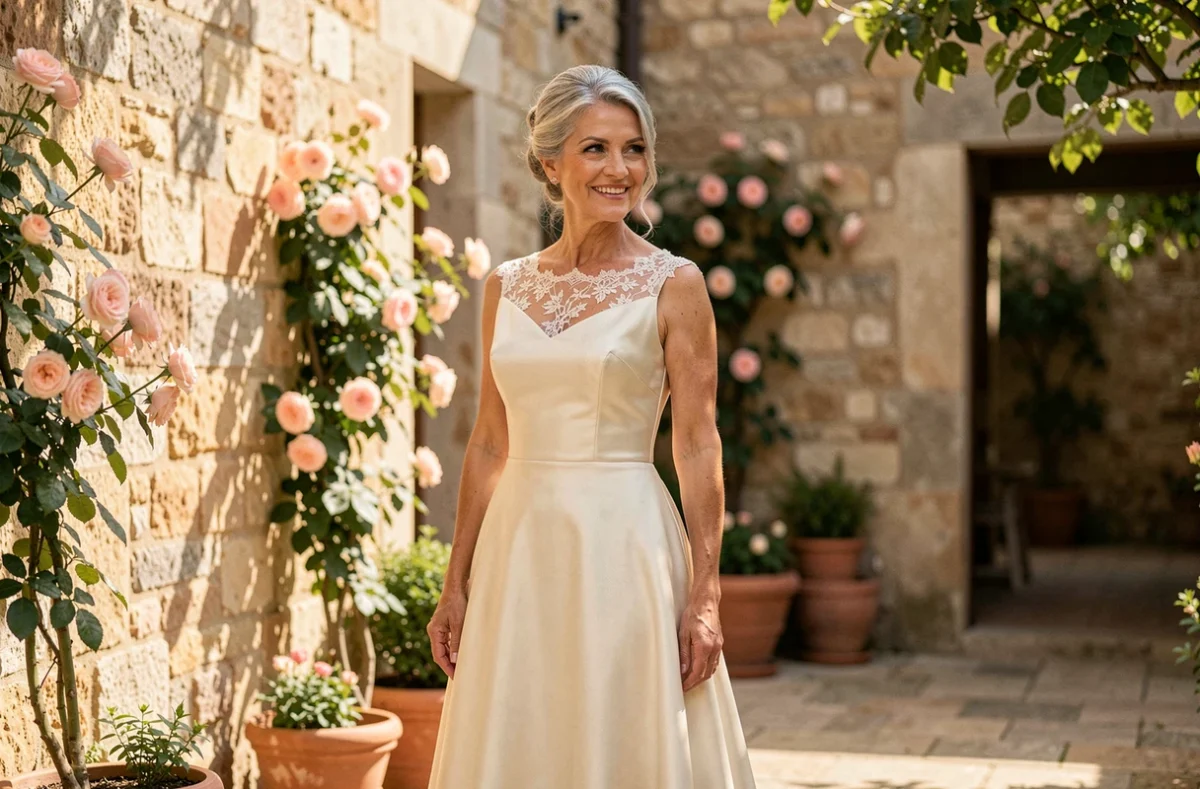
Ivory, champagne and blush dominate collections for mature brides. These warm shades flatter mature skin better than bright white, which can make the complexion look harsh under artificial lighting.
A crepe trouser suit with an embroidered jacket is an alternative chosen by a growing number of brides over 60. It offers greater freedom of movement and works for both short civil ceremonies and longer receptions.
When it comes to accessories, one simple principle works well: choose a single focal point. A hat with a short veil or a vintage brooch on the collar is enough to personalise the outfit. Adding too many elements—a tiara, statement necklace and embroidered belt—can overwhelm the silhouette and draw attention away from the dress itself.
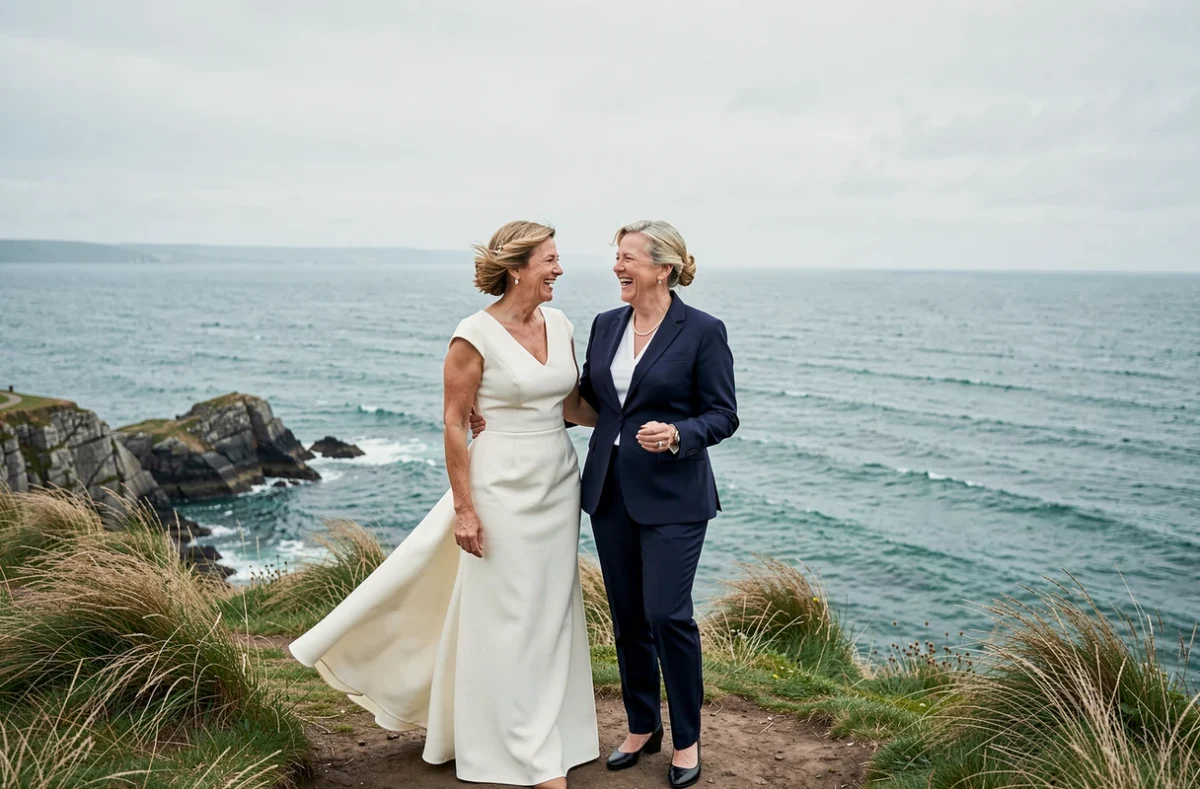
A tone-on-tone satin belt defines the waist without creating a stark contrast. It works particularly well with empire and A-line cuts, accentuating the raised waistline without feeling restrictive.
Trying on a wedding dress after 60: what changes in practice
Plan for at least two fittings, several weeks apart to check that the dress is genuinely comfortable. The first fitting helps you rule out unsuitable cuts. The second, ideally with your final shoes and underwear, reveals any alterations needed.
Invisible zips have replaced lace-up closures in most styles designed for mature figures. They make it easier to get dressed without help—a practical advantage for brides who want to remain independent on their wedding day.
One technical detail that is often overlooked is the lining. A microfibre lining reduces friction and regulates body temperature better than standard polyester lining. Check this by turning the dress inside out during your fitting.
Your final choice depends on balancing lasting comfort, the overall budget (dress, alterations and accessories) and the style of ceremony. A dress you can wear comfortably for six hours is worth more than a spectacular one you take off before dessert.