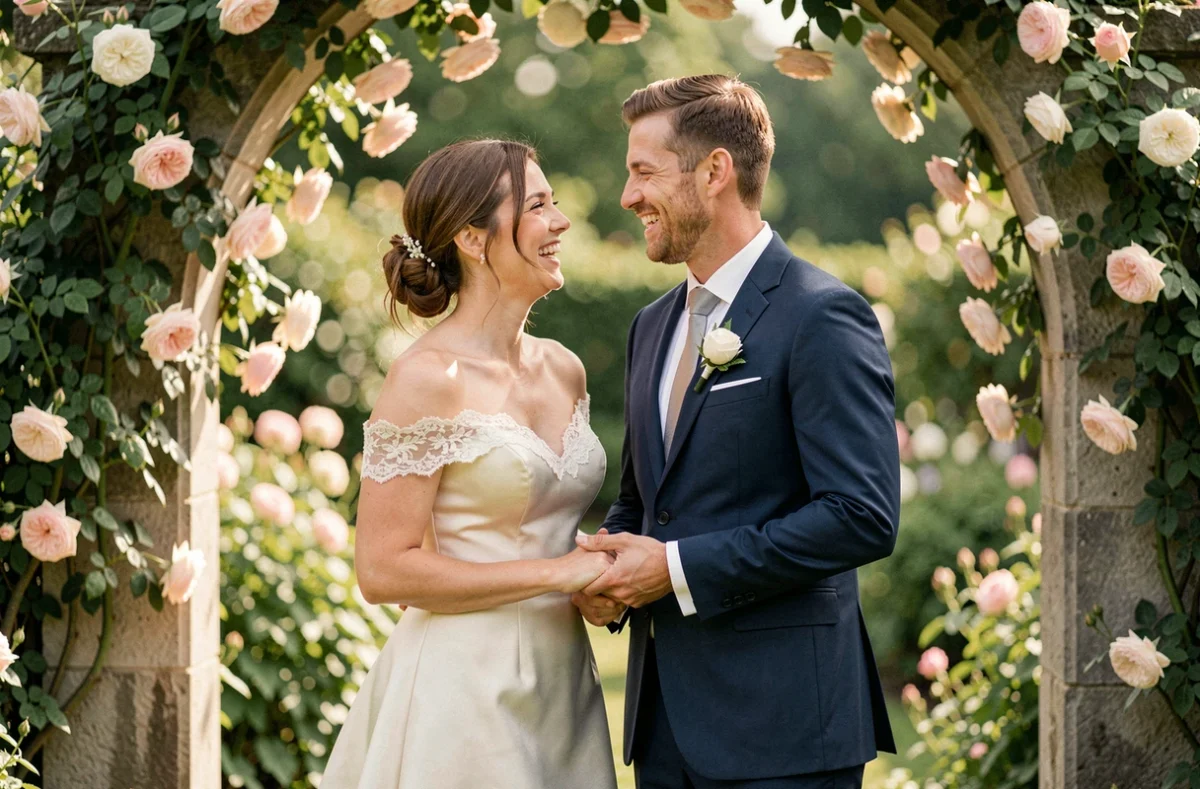
Before choosing a theme or color palette, couples often run into a constraint few anticipate: the administrative timeline. In France, the banns must be published for ten days, and the civil ceremony cannot take place before the tenth day following publication.
The application must be filed at the town hall of the municipality where either future spouse lives or resides, or where their parents live. Checking these deadlines with the town hall before signing a contract with a reception venue can prevent having to reschedule all the arrangements.
Wedding venue accessibility: beyond the reception room
You visit an estate, fall in love with a renovated barn or a tree-lined park, and book it. The problem arises when a guest using a wheelchair discovers that the path from the parking area to the venue is a gravel track, or a grandmother cannot reach the restroom without climbing stairs.
Accessibility needs to be checked along the entire route, from the parking area to the table. This includes paths between the ceremony and reception venue, restrooms, and outdoor cocktail areas. Venues open to the public must make a public accessibility register available, so you can ask specific questions before signing.
One helpful approach is to add an optional question to the RSVP form sent with the invitation: what accommodations would help each guest participate fully? Asking everyone—not just people identified as having a disability—avoids any awkwardness. You can then confirm the arrangements with the venue manager. Some couples plan their reception through https://www.et-ils-se-marierent.com to find venues and vendors suited to these practical requirements.
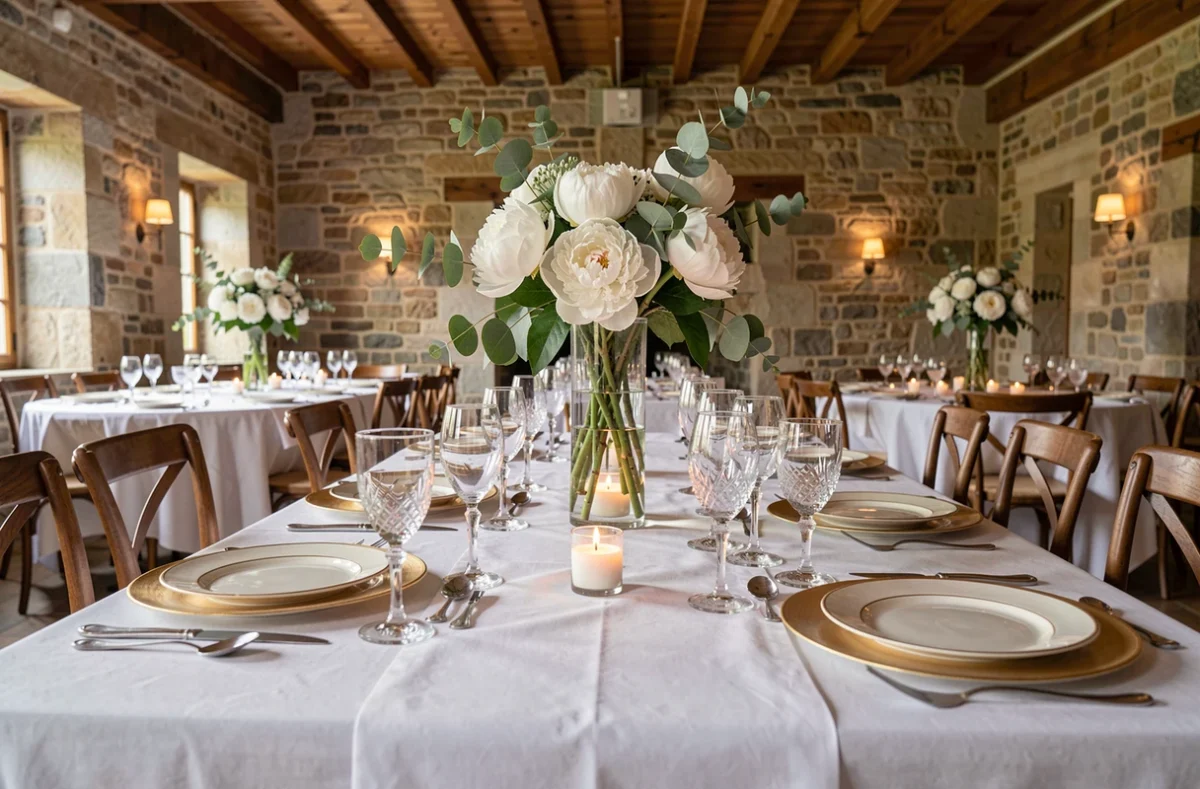
Guest transportation and logistics between key moments
A wedding rarely takes place in just one location. The town hall, a venue for a secular or religious ceremony, the cocktail reception, and the reception hall: every transfer is an opportunity for guests to get lost, delays to arise, or stress to build for those who do not drive.
Guest transportation is a major part of event planning. Choosing a venue close to public transport or arranging shuttles between locations reduces the need for individual trips. You can also set up a carpooling system using a shared spreadsheet accessible from the wedding website.
What to check before confirming the venue
- The distance between the town hall and reception venue, and realistic travel time on a Saturday (not just what a GPS says on a weekday at 10 a.m.)
- The number of available parking spaces, including spaces for people with reduced mobility
- Whether passengers can be dropped off and picked up at the main entrance without blocking traffic
- Whether there is a train station or bus stop nearby, and the time of the last service in the evening
This logistics planning, often left until the end, is best handled as soon as you choose the venue. A beautiful but isolated estate with no transportation options makes the day more difficult for some guests, especially older people and those traveling from far away.
Wedding vendor commitments: what the quote should specify
You compare caterers’ prices, look at the photographer’s pictures, and check the DJ’s playlist. Less often, you read the contract clauses covering food waste management, sorting surplus food, or the type of tableware used.
Sorting and waste management requirements apply to professionals, not directly to the couple. The caterer and reception venue must comply with current regulations. Asking how they meet these requirements helps you make informed choices and include these commitments in the quote.
Specific questions to ask the caterer and venue
What happens to leftover food at the end of the evening: is it donated, composted, or thrown in the regular trash? Is the tableware reusable or disposable, and if disposable, what is it made of? Does the venue provide recycling bins that guests can access during the cocktail reception and evening? Having these points specified in the written contract turns a vague intention into a measurable commitment.

The ceremony and wedding-day schedule: creating a realistic timeline
A wedding-day schedule works like a sequence of time blocks. Each block (getting ready, ceremony, couple portraits, cocktail reception, meal, evening celebrations) takes a certain amount of time. A common pitfall is underestimating how long group photos and travel between locations will take.
We recommend building the schedule backward from the time dinner is served. If dinner starts at 8 p.m. and the cocktail reception lasts an hour and a half, you know that couple portraits need to finish before 6:15 p.m. to allow time to get to the cocktail venue. You can then work backward through the morning preparations, allowing enough time for hair, makeup, and getting dressed.
Allowing a fifteen- to twenty-minute buffer between each block helps absorb delays without disrupting what comes next. An overly tight schedule creates constant tension that affects the couple, the photographer, and guests who are left waiting.
The length of each part of the day varies depending on the number of guests, the distance between venues, and the type of ceremony. A civil ceremony followed by a secular ceremony at the same estate requires a different schedule from a wedding with a religious ceremony at a church thirty minutes from the reception venue.
Planning a wedding that reflects who you are comes down to these practical details: an accessible route, transportation that works for everyone, clear vendor contracts, and a schedule with room to breathe. These operational choices, far more than choosing between peonies and roses, determine whether the day feels smooth or stressful for the couple and their guests.